• Monday, November 10th was one of the scariest nights of my entire life. Forrest had a seizure at 8:49 PM — the first time he’s ever seized before midnight. I immediately grabbed his rescue meds (intranasal Midazolam) and as I was administering it, the unimaginable happened:

    The atomizer tip came off… and went straight into his mouth.

    He was actively seizing. His jaws were snapping. His body was rigid. And right in front of me, my boy — my entire world — was choking.

    We live 50 minutes from the nearest emergency vet.
    Fifty minutes.

    I tried to get my fingers in his mouth to see if I could pull it out, but he was still seizing and I was terrified I’d push it deeper. When the seizure finally stopped, I tried the Heimlich maneuver, but his muscles were still tight and unresponsive. I could feel precious time slipping away.

    I had to make a choice.
    And I chose speed.

    I loaded him up and drove.


    At the Emergency Vet

    X-rays showed the atomizer tip was lodged in his esophagus. They kept him overnight to perform a scope the next day because the specialist wasn’t in that night.

    It was our fourth night apart in his entire life. He’s eight.

    The next morning they did more X-rays — and it was no longer in the esophagus, stomach, or small intestine. They believed it had moved into the large intestine and would pass naturally, so they discharged him.

    I was relieved he didn’t need anesthesia… but he was coughing and retching, like it was still stuck.


    Our Regular Vet Visit

    The next morning I took him to his regular vet. New X-rays showed he had developed aspiration pneumonia from the ordeal.

    We were supposed to leave for our beach trip that Saturday, and I was fully prepared to cancel. She started him on antibiotics and said he should feel better in 48 hours and that we should still go on our trip.

    I didn’t feel great about it — honestly, I’d been nervous even before the choking incident. A 9-hour trip with an epileptic dog who gets anxious in the car? Terrifying.

    But I also don’t want to reach the end of our time together and realize I let fear dictate our lives. I want him to experience joy.
    So we went.


    Vacation, Vet Visits, and a Miracle

    He was sick the entire week.
    Coughing.
    Retching.
    Acting like it was still stuck in his throat.

    I took him to an animal hospital while we were out of town.

    And then — on the last day of our trip — he coughed the entire atomizer tip up onto the floor.

    Nine days after he choked on it.

    It was as clean as a whistle.

    We followed up with his vet the day after we got home (our 4th vet visit in 11 days) and he got a clean bill of health.
    He survived choking.
    He survived pneumonia.
    And he made it through the entire trip — sick, anxious, coughing — without a single seizure.

    The grace of God covered him that entire week.

    He ended up having one five days later, but at least we were at home.

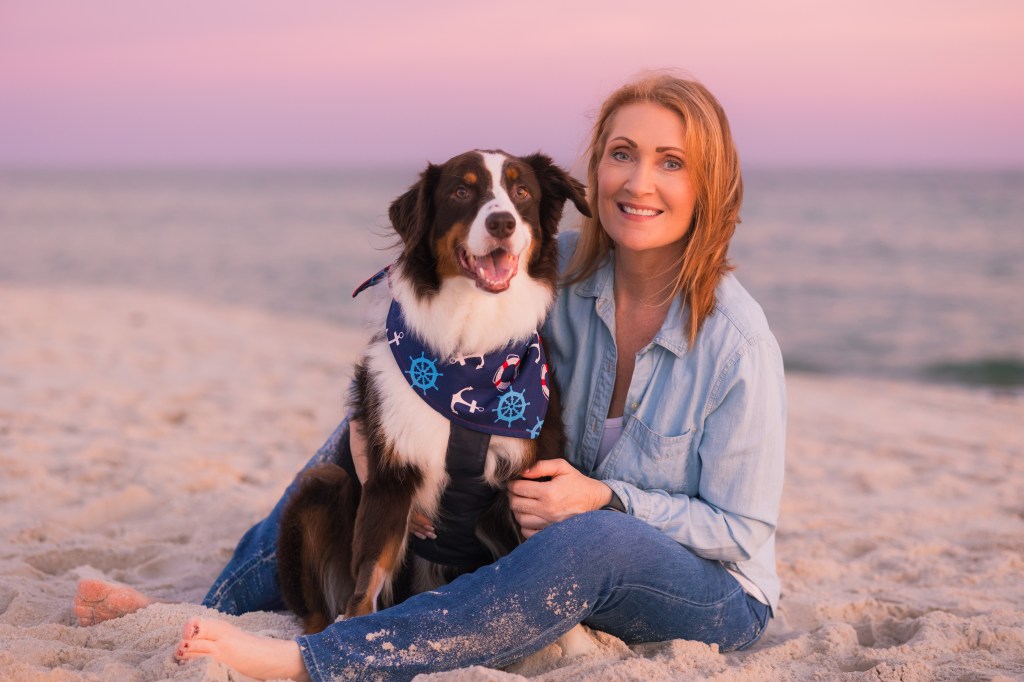
    (I’ve included a couple of photos from our beach trip at the end of this blog if you’d like to see them. We were only at the beach a few hours through the whole trip. 🤍)


    If You Have a Seizure Dog, Please Read This

    Never use slip-on atomizer tips.
    Only use locking atomizer tips.

    If it weren’t for the grace of God, Forrest’s story would have ended very differently.

    Please share this with anyone who has a seizure dog — in groups, pages, anywhere. It could save a life.
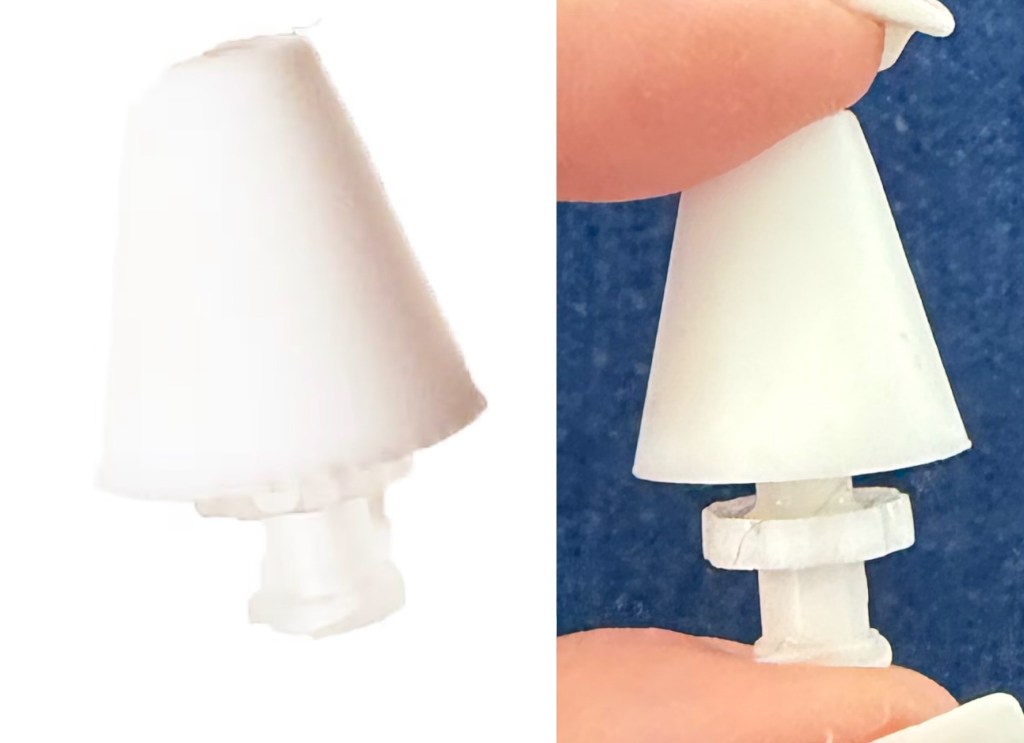
    slip on atomizer tip that he choked on then coughed up nine days later.

    Some simple, light hearted photography tips for taking more magical photos of your pup by the Christmas tree. 🎄📷


    How to Take Magical Christmas Tree Photos of Your Pup 🎄✨**

    After that emotional rollercoaster… let’s end with something uplifting.

    If you want dreamy, magical photos of your pup by the Christmas tree this year, here’s my go-to method:

    📸 Step-by-step Christmas Tree Pup Photo Tips

    1. Move your dog away from the tree.
    Not up against it — give them space so the lights blur beautifully.

    2. Put your phone on Portrait Mode.
    This creates that soft background glow (bokeh effect).

    3. Light in front, not behind.
    Use natural light or a ring light on low brightness (flash is a no-go for seizure pups!).

    4. Get close to your dog.
    Let the tree stay soft and magical in the background.

    5. Use treats + favorite words.
    Get their attention gently.
    (Always follow through on your treat promises — trust matters!)

    6. Edit lightly.
    If it’s too dark, bump up shadows and exposure just a touch.
    Wipe tear stains or eye crust before shooting to make the photo cleaner.

    ✨ Extra Tip: Focus on the Eyes!
    Before you take the photo, tap on your dog’s eyes on the screen. This tells your phone exactly where to focus. If you don’t, it may lock onto their nose instead — and that will make their eyes look soft or blurry. Sharp eyes = a magical Christmas tree portrait!

    These little steps take your photo from cute ➜ magical.

    If this helps you, let me know in the comments! 🎄🐾

    From our lavender world of grace, we’re holding onto hope, walking by faith. 💜

  • If you are new to dog seizure world, please read. Share it on social. Print and hang on your fridge. Bookmark this blog in your phone or computer. This is dog seizure 101.


    If your dog has 3 seizures in less than 24 hours, please take him to the nearest emergency center.
    If your dog has a seizure that lasts 5 minutes, this is also a medical emergency. Get an ice pack to put on his back for the drive, get him in the car and take him to the nearest emergency center as quickly as possible. Do not pass Go. Do not Google. Do not get in this group and ask. This is your sign. Just GO!
    YOU NEED RESCUE MEDICATION. Insist on them with your dog’s vet/neurologist. Rescue meds (intranasal Midazolam or rectal Diazepam) are administered when a seizure starts to make it stop. The longer a dog’s seizure is allowed to go on the more harm it causes, even to the point of death. Yes this really happens and it doesn’t take long because the body temperature rises quickly during a seizure.
    Every adult in your home needs to know how to administer rescue meds and how to care for a dog during and after a seizure.
    Seizures are serious. CBD, ice packs, ice cream, ocular compressions, essential oils — none of these will save your dog so if you choose to use them as a means of additional comfort or support, that’s your choice but understand that’s all that they are.
    No one expected to be here or wanted this for our dogs and our dogs certainly did not choose this for themselves.
    No one wants to see their dog go on lifetime meds. But if you have an Aussie with seizures, the longer you wait to start meds (real AEDs — not CBD, etc.), the worse it will be on your dog. Their brains form seizure patterns very quickly and Aussie seizures are harder to bring under control due to the genetic makeup of the breed.
    Making an appt with a veterinary neurologist is the best thing you can do. They know much more about this disease than veterinarians. Think of it like general practitioners for us vs a specialist. You don’t have to opt for the diagnostic imaging like an MRI/spinal tap.
    Most of us have to drive a good way because there aren’t that many veterinary neurologists, but it’s only once a year for most of us. It’s worth it.
    Ignore almost everything you read about seizures in other dogs. Aussies are different. In other words, if you read in another group that Sally has been managing her chihuahua Buster’s seizures for years with CBD drops and MCT oil added to her food and she slips some essential oil under her nose when she starts having one and it makes it stop, great for Sally. Her dog is not an Aussie.
    Watch kids around epi dogs. Not all kids know how to behave around dogs anyway and if yours don’t, it’s time they learn. Your dog deserves to feel safe in his home with or without this (or any other) disease. You make necessary adjustments for kids. Your dog deserves the same. Stress is a huge trigger for seizure dogs. You may have to make some adjustments to your life and home to help your dog.
    He’s part of your family too.
    Create a safe space for them wherever they sleep, as most (not all) happen while they are sleeping. Block stairs off if you have them, put pillows where you can so they don’t hit their head, etc.
    Keep other dogs and children away from your pup during a seizure. If you are his person, let him know you are there. Speak softly to him, make sure his head is cushioned, turn off bright lights and any background noise, keep your hands away from his mouth. You don’t have to move away from him like he’s on fire. You can stay near and rest a hand gently on his side and let him know you are there.
    Allow him the space to recover near you but away from other activity. The postictal phase may only last an hour but it can take 24–48 hours for your pup to feel like himself again.
    Keep seizure days calm, even if he acts like he wants to play later. It’s for the best if he just has a rest day while his brain and body recover. The last thing you want is for him to hurt himself (because they are sometimes “off” the rest of the day) or have another seizure within the same day. Once they start having cluster seizures, the harder it will be to break that pattern.
    Rethink your pup’s preventatives. There are ones out there that are safer for epi dogs than others.
    Never allow your dog’s vet to administer more than one vaccine at a time to your epi dog. And don’t just take the advice of your vet as far as what is safe, do your own research (this goes for everything). Ask questions. You are your dog’s advocate and he’s counting on you to be a good one. He can’t fight this alone, and he doesn’t want to.
    If your dog is on Phenobarbital or another AED, they need to be on a top notch liver supplement and it needs to be given properly for it to absorb and work. Read the label and administer accordingly.
    AEDs are for providing a level of control over the seizures — not to stop them altogether, though occasionally you will read a story or two where the dogs got lucky and went many months or years. For most of us, that’s not the case. Seizure control is different for every dog.
    Keep a detailed seizure log. Make notes of food changes as well. Everything that has to do with your dog, write it down. After a while you can choose to leave some things off but as they are establishing a pattern, every detail matters.
    In time, you may be able to notice the signs your pup gives you that one is coming. This is hugely helpful in managing your dog’s epilepsy!
    If you already had health insurance for your dog before his first seizure, fantastic! If you didn’t, contact AKC. They advertise that they cover dogs with pre‑existing conditions. I don’t know all the details but what I read, it sounds like all that is required is to carry coverage on the dog for one year before they will start covering the pre‑existing condition. This is a very small price to pay. Your dog will have epilepsy the rest of his life. One year will go by so fast and at the end of that year, you will be so glad you made the decision to get him covered.
    As serious as this disease is, if you stay on top of your dog’s health; get him or her to a neurologist, start meds, are diligent about monitoring their blood work, etc., most live their whole lives with epilepsy and don’t succumb to this disease but something else. Meaning, you will adjust, hard as it will be in the beginning, and you can enjoy life again with your pup. There will be precautions you’ll need to take but it’s nothing that can’t be managed if you will dedicate yourself to helping your dog. Guess what? He didn’t want this either. He didn’t ask for this and he doesn’t deserve it. No dog does. What they do deserve is to be loved and supported through it.
    Love,
    Callie and Forrest aka “little dude”


    (If I can get through this, I promise you can too. I am a huge worrier, an overthinker of epic proportions and this dog is my child. Like, he’s all I’ve got. So when I tell you I struggled in the beginning for months (and still do over some things), I mean it. I’m terrified every day of what the future holds for my boy. He’s had 21 seizures in 16 months and every time he has one it breaks my heart. But we’re living our lives and cherishing every seizure‑free moment because they add up to so much more than the seizures. What other choice do we have? He’s my family. I feel blessed every single day that God chose me to be the human to care for him on this earth. If he could, he’d do the same for me. ☺️)

    From our lavender world of grace, we are holding onto love, walking by faith. 💜

    Pic from our recent beach trip. You’re going to want to read about this! Coming up in my next blog post! Subscribe so you don’t miss it and to follow Forrest’s daily journey, follow him on FaceBook. I share his epi journey and all the other days in between. 🐶

    I am not a veterinarian. The information shared on this blog is based on my personal experiences with my dog and research I have done to help other pet parents. It is intended for educational and informational purposes only and should not replace professional veterinary advice, diagnosis, or treatment. Always consult your veterinarian regarding any medical concerns, medications, or care for your pet.

  • Our seizure pups are warriors. 🧠 And one of the most important things we can do for them—besides managing their seizure activity—is supporting their liver health. Today I want to talk about why liver care matters so much for dogs on phenobarbital and other anti-seizure medications metabolized by the liver, and the steps I take to protect Forrest’s little liver every single day. ❤️‍🩹

    Why Liver Support Matters

    Phenobarbital (and several other AEDs) are incredibly effective at controlling seizures, but they are also very demanding on the liver. Over time, they can cause elevated liver enzymes, inflammation, strain and irreversible damage—especially in dogs on long-term therapy. This is why routine monitoring and proactive liver support isn’t optional… it’s essential.

    Why I Use Denamarin Advanced

    Let me say this loud and clear:
    Milk thistle and Denamarin are NOT the same thing.
    And Denamarin Advanced is NOT the same as basic Denamarin.

    Yes, Denamarin contains milk thistle (silybin), but it also contains SAMe and uses a specific formulation that makes it FAR more bioavailable and effective. Denamarin Advanced is considered the gold standard in liver support in veterinary medicine. When it comes to protection from a strong medication such as phenobarbital, second best just isn’t good enough.

    Here’s why I love it for Forrest:

    • It protects liver cells
    • It helps the liver regenerate
    • It helps reduce inflammation
    • It supports healthy enzyme levels

    But—and this is big—it must be given on an empty stomach.
    If it isn’t, the body can’t absorb it properly.

    How I Time It

    Forrest gets his Denamarin Advanced around midnight.
    That’s a few hours after his frozen bedtime treat and several hours before breakfast. Because I break his meals into smaller portions throughout the day so he never feels hungry and gets to “snack” often, this is the only time in our schedule when I can guarantee his stomach is truly empty. Phenobarbital makes them feel hungry and want to eat, so feeding smaller meals throughout the day is a great way to help them not feel hungry or deprived.

    If you struggle to find the right window, you are NOT alone. It takes some adjusting.

    That’s why I’m sharing what works. best for us. You may find it to be a great option for you as well.

    One more thing:
    You can’t buy Denamarin Advanced on Amazon.
    It’s a veterinarian-only product. Forrest’s vet offers autoship, which makes life so much easier.

    If you ever want a breakdown of the differences between milk thistle, Denamarin, and Denamarin Advanced—just ask ChatGPT. It will spell it all out for you.

    Lab Work Matters—Don’t Skip It

    If your dog is on phenobarbital, you must stay on top of their lab work.

    ✅ Drug monitoring panel every 6 months
    This checks:

    • phenobarbital levels (to make sure the dose is safe & therapeutic)
    • liver enzymes
    • full CBC/Chemistry

    Other AEDs also require monitoring, but the timing varies. (Your vet can give you the exact schedule for potassium bromide, zonisamide, etc.)

    Why I Do Yearly Abdominal Ultrasounds

    Call me an extra dog Mom—I know I am and I don’t mind one bit!
    When it comes to Forrest’s health, I refuse to be reactive. I want to catch issues early. He’s my furchild and I want to stay on top of his health in every way possible.

    So, in addition to routine labs, Forrest gets an abdominal ultrasound every year.

    This helps check:

    • the size and structure of his liver
    • any thickening, nodules, or abnormalities
    • early signs of disease

    This isn’t just for AED monitoring.
    It’s also a proactive measure for spotting hemangiosarcoma, especially since Australian Shepherds are among the breeds at higher risk.

    (Important reminder: cancer is never breed-specific. Any dog can get it.)

    Other Things That Can Harm the Liver

    Even if your dog isn’t on anti-seizure drugs, their liver can still be affected by:

    • certain antibiotics
    • environmental toxins
    • leptospirosis
    • chronic inflammation
    • diet issues
    • genetic conditions
    • long-term medications

    Liver protection isn’t just for epi dogs. Check with your dogs veterinarian if you have any concerns about your pups liver health.

    A Reminder From Me to You

    Being proactive is the best gift you can give your dog.
    Bloodwork, monitoring, supplements, and knowledge WILL make a difference.

    And if you’re ever unsure about something?
    Ask. Learn. Research. Advocate.
    Nobody knows your dog like you do.

    Let’s Talk

    If you have an epi dog, what are your biggest health concerns for him or her?
    And how do you stay on top of their liver health?
    Leave a comment—I’d love to hear from you!


    Closing Thoughts

    Thank you for being here.
    Thank you for caring about your dogs the way you do.
    And thank you for helping this blog grow—
    Please share this post on your social media to help spread awareness about canine epilepsy and support other dog parents walking this road. You never know who might need it.

    From our lavender world of grace, we’re holding onto hope, walking by faith.
    💜

    “The righteous care for the needs of their animals.” — Proverbs 12:10

    ⚠️ Important Disclaimer

    I am not a veterinarian.
    Everything I share is based on my experience as Forrest’s mom, research, and advice from his veterinary team. Always talk to your dog’s vet before making changes to their medications or supplements.

  • The time change is coming up this Sunday, and it’s one of those small seasonal shifts that can make a big difference for seizure-prone pups.

    If your dog takes anti-seizure medication, be mindful that when we “fall back,” sticking to the same clock time could actually create a 13-hour gap between doses. That sudden change can throw off your dog’s medication schedule — and their sensitive circadian rhythm — which can sometimes trigger breakthrough seizures.

    See my last blog post for more detailed info on how to handle the upcoming time change.

    Forrest’s clock rest last Friday (three days ago), after another 21 day stretch. This is typical of his usual pattern. I always administer his rescue medication Midazolam to help stop the seizure. This one was shorter for him, about 45 seconds. Rescue meds are so important. They’re literally life saving. If you’d like to understand them better or learn more about rescue meds, check out this blog post.

    It’s been awhile since I shared a recipe so in light of his recent seizure, I thought I’d share the recipe for his post seizure frozen enrichment treat. I keep one or two in the freezer so I can give him one when he’s recovering from a seizure.

    It helps him settle and stabilize his blood sugar afterward. It’s soothing, lasts a while, and gives him something positive to focus on.

    He loves this toy and it lasts longer than any other one he’s tried so we highly recommend it.

    Oh, bother…

    Forrest’s Post-Seizure Frozen Enrichment Treat 🍯

    Ingredients:

    • Plain Greek yogurt
    • 1 teaspoon honey
    • Natural peanut butter
    • A little bit of pure pumpkin

    Adjust the portions based on how many you want to make and your dog’s dietary needs or restrictions. Mix everything together, spoon it into your dog’s favorite enrichment toy.

    It’s a simple comfort that helps Forrest recover — and might help your pup too.

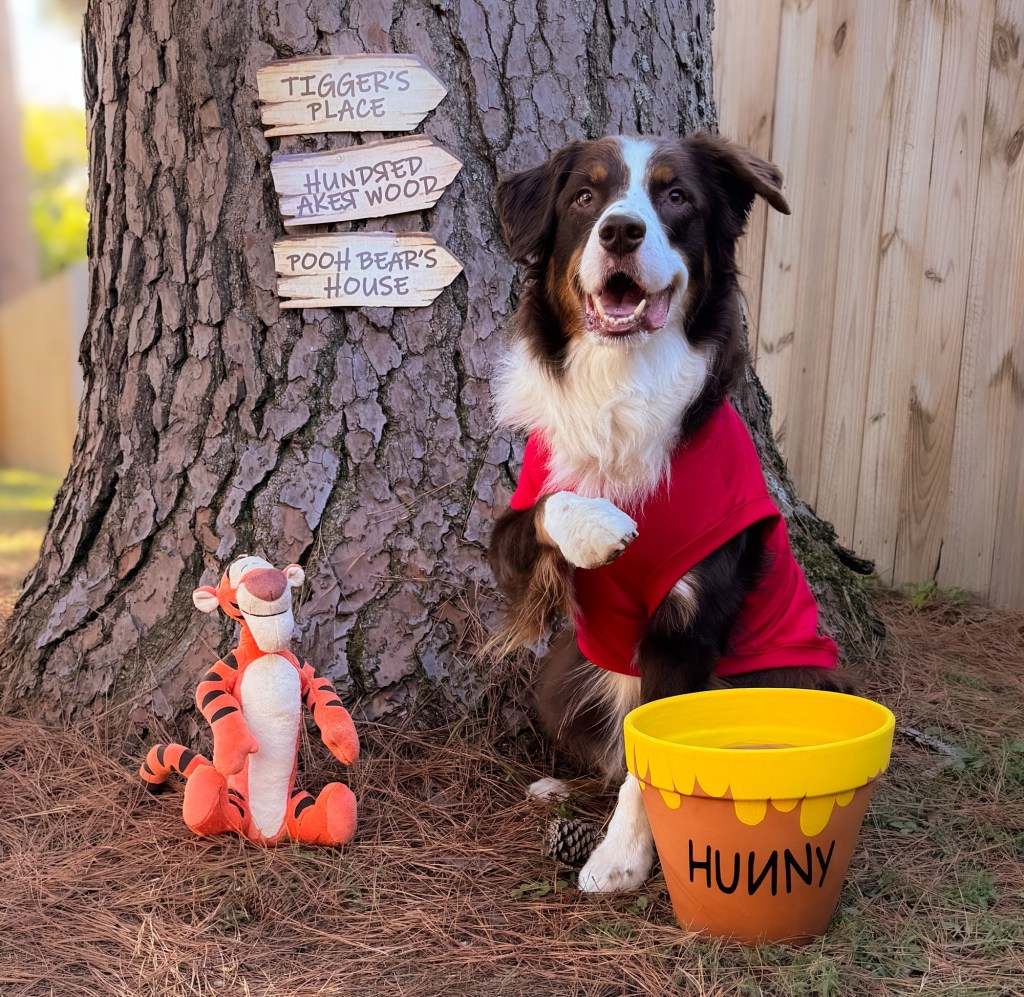
    Speaking of honey, we hope you enjoy these pics of Forrest in his Halloween costume. Isn’t he the cutest Pooh!? 😍

    If you want to follow Forrest’s journey, follow him on social media. I share on his FaceBook page daily. His life is so much more than his epilepsy and it’s so important for people to see that.

    Please consider sharing this blog with anyone you know who loves a dog with epilepsy. Thank you! ❤️‍🩹

    What about you? How are you making adjustments to keep your epi pup on track for the time change? ⏰

    From our lavender world of grace, we’re holding onto hope, walking by faith. 💜


  • Daylight Saving Time ends soon, and for those of us caring for dogs with epilepsy, medication timing matters more than ever. Even a small shift in timing can affect your dog’s blood levels of anti-seizure medications (AEDs), which may increase the risk of breakthrough seizures. Planning ahead helps you avoid unnecessary setbacks.

    When We Fall Back (End of Daylight Saving Time)🍂

    When the clocks move back one hour, you have two choices:

    1️⃣ Shift with the new time
    Example: If your dog gets medication at 8:00 AM/PM, you’ll now give it at 7:00 AM/PM (new time).
    ✅ This keeps the 12-hour interval consistent and often works best for most families. Earlier doses help maintain stable blood levels, making this the easiest and safest option.

    2️⃣ Stay on the “old” time
    Example: Still giving meds at 8:00 AM/PM (old time) after the time changes.
    ⚠️ This creates a 13-hour gap between doses instead of 12, which can allow AED levels to dip. If you choose this route, make gradual adjustments (15 minutes earlier each day over several days) leading up to the time change. This helps minimize the risk of breakthrough seizures.


    When We Spring Forward (Start of Daylight Saving Time)🌸

    When the clocks move forward one hour, the situation is a little easier:

    1️⃣ Shift with the clock
    Example: 7:00 becomes 8:00.
    There’s no gap — it just bumps the schedule forward an hour. Most people can switch right over without issue.

    2️⃣ Stay on the “old” time
    Gradually adjust forward over several days if you want to maintain your original 12-hour interval.


    🐾 How I Handle It With Forrest’s Meds

    Forrest’s regular medication schedule during Daylight Saving Time is 8 AM / 8 PM.

    • When we fall back, we switch to 7 AM / 7 PM to maintain a true 12-hour schedule.
    • When we spring forward, we shift back to 8 AM / 8 PM again.

    If you’re planning any schedule adjustments for your dog, it’s wise to check with your neurologist about using pulse doses of Keppra or Diazepam during the transition period to help prevent breakthrough seizures. Forrest’s neurologist has advised using Diazepam this way if we stick to our regular 8:00 schedule instead of falling back to 7 AM / PM like we always have before. I’ve been considering it, but the thought of adjusting his meds makes me nervous, so as of now I’m unsure what I will do.


    Why This Matters: Circadian Rhythms and Seizures🌙

    Our epi dogs have very fragile circadian rhythms, and many seizures are tied to these natural cycles. When the time changes, their rhythms shift, too.

    Forrest’s seizure log shows this clearly:

    • During Daylight Saving Time, most of his seizures happen closer to the time we usually wake up.
    • When Daylight Saving Time ends, his seizures tend to occur earlier, between 1–3 AM.

    Understanding your dog’s patterns can be incredibly insightful. Here’s a tip: Plug your dog’s seizure dates and times into ChatGPT and ask it to look for patterns. You can also include other details like when medications were started, doses changed, or stressors occurred. The more data you include, the more helpful the insights will be.


    Be Prepared, Stay Consistent

    Shifts in medication timing may seem small to us, but they can have big impacts on seizure control. Whether you shift all at once or make gradual changes, the key is planning ahead to keep your dog’s schedule (and brain chemistry!) as stable as possible.


    How About You?

    How do you handle the time change with your dog? Do you stay with the new time to keep your epi pup on track or do you make adjustments to stay with your specific time? I’d love to hear what works best for you — share your thoughts in the comments below.


    A Little Reminder

    I’m not a veterinarian. I’m a devoted dog mom sharing what I’ve learned through my journey with Forrest and guidance from his veterinary team. Always consult your vet or neurologist before making changes to your dog’s medication schedule.

    If you found this post helpful, please share it on your social media to help spread awareness about canine epilepsy and support other pet parents caring for dogs with seizures. The more this blog grows, the more we can help other epi dogs and the humans that love them.

    Follow Forrest on Facebook for daily life updates — not everything is about seizures, but I share our experiences to help others and show that dogs with epilepsy can still live full, joyful lives. Caring for a special needs dog is a privilege, and while I wish I could take his seizures away, I wouldn’t trade him for anything in the world. 💜